Sunday, January 16, 2011

Day 4: Friday, June 11, 2010

Todays agenda is the reason why were here in Paris. Isobel and her boyfriend Steve picked us up by taxi to go to her MBA graduation at HEC Paris in Jouy en Josas, a suburb close to Versailles.

Jouy en Josas was close to an hours ride past the frenzied traffic and buildings of the city core. Huge trees and wild flowers dotted the fields in the outskirts of Paris. Here and there an occasional herd of cows came into view, amid the plowed fields and patches of vegetation. Along the road were new housing developments as well as huge houses with treed lots one would see in a typical North American suburb.


The HEC Paris School of Management nestles on a 300-acre property on the hills of Jouy en Josas. The international business management school is housed in a complex of low, modern and spare buildings bare of the opulence and intricate facades one would associate with old French architecture. More of Frank Gehry, even more of Corbussier: lean, geometrical, bordering on the austere, befitting its business school agenda. There was a totally relaxed air as Isobel whisked us through their classrooms and lecture halls, the students lounge, the various meeting areas where they tossed and bounced off ideas.

Before the graduation ceremonies hosted by their associate dean for HEC MBA, Dr. Valérie Gauthier, MBA candidates, mentors, parents and friends, met and greeted each other over a scrumptious lunch served, buffet-style, on the graduate school grounds. There we met Isobels friends and classmates and their parents and relatives. They were a bouncy lot, happy, welcoming and without guile; it was like meeting old friends.


Having spent their one and a half years in HEC Paris together, parting after the ceremonies was a heartbreaker for all graduates. Perhaps theyd meet again, perhaps not. But whatever was in their minds was tossed to the air when they gave their final toss to their caps, to the future, and beyond.


As parents, we felt proud for Isobel and of what shes accomplished on her own, winning the Forté Foundation Fellowship for women leaders and completing her MBA program with high marks. We prayed she would continue to contribute her talent to causes dear to her heart.

Day 3: Thursday, June 10, 2010


First stop: The Louvre Museum.

Since the museum was only a few hundred metres away from our flat, we walked to Museum’s gates at the Metro stop M. Palais –Royal/Musee du Louvre.


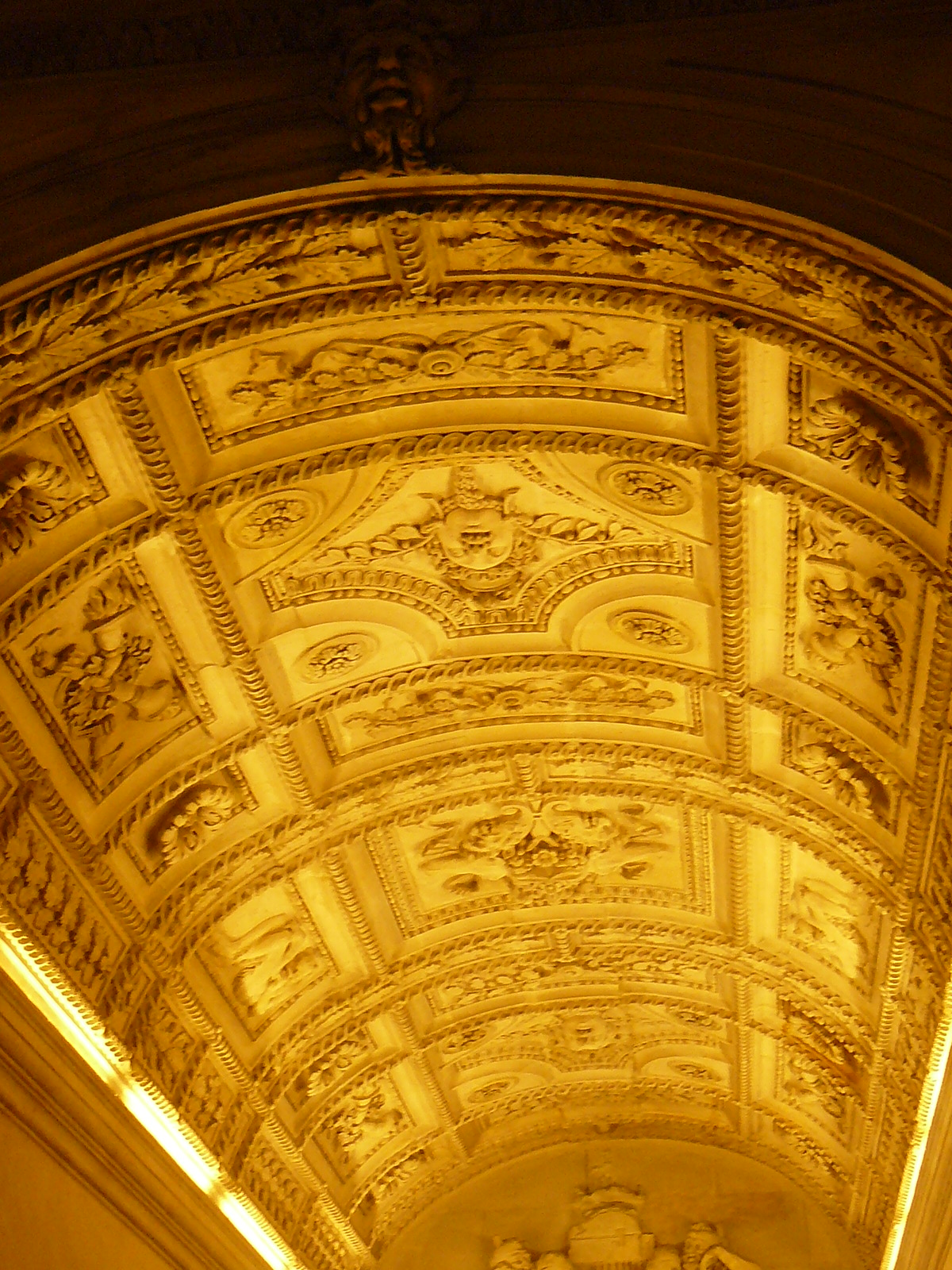
Construction of the world’s largest museum began in 1190 and still continues today. We entered through the baroque gates to the courtyard (Cour Napoléon) and on to underground level surmounted by a glass pyramid.


Architect I.M. Pei’s modernist pyramid was built amid much-public debate in 1989, yet when viewed today seems the apt addition to the world’s largest collection of antiquities, sculptures, drawings, prints and objets d’art. Sprawled at 45 acres, the Louvre is Europe’s largest royal palace; in fact, it can easily fit in three cities the size of Vatican City.

According to history buffs, the first building on the site was built on the Cour Carrée (square courtyard) in the 7th century, in an area known as Lupara, Latin for wolf hunt kennels, and was later adapted in French to Louvre. However, the first documented structure was a small fort built by King Philippe Auguste (c. 1190-1223) to protect the western wall of Paris.


Since we couldn’t possibly visit all of the Louvre’s departments (there are seven), we chose to zip through the Egyptian and Oriental Antiquities to roam at the Greek, Etruscan and Roman galleries and view the museum’s two most famous pieces, the Venus de Milo and the Winged Victory (Nike) of Samothrace.


We wanted to look for Venus de Milo but couldn’t go past the crowds, so we opted to brave a flight of stairs to gaze at the Winged Victory, the statue of the Greek goddess of victory, still as awe-inspiring as when it was first sculpted in 190 BC.


Then we went on another rush—searching for the famous Mona Lisa painting by Leonardo da Vinci, the most famous among the Italian Renaissance works. Safe and secure under a glass enclosure, La Joconda (painted in 1503) lives up to her name, the Smiling One, as she smiles mysteriously at millions of gawkers each year.


The Louvre’s painting collection which begins with the Middle Ages up to the mid-19th century boasts of masterworks by Jan Van Eyck, Peter Paul Rubens, Jacques-Louis David, Jean Auguste Dominique Ingres, Goya, Velasquez, Eugene Delacroix, Raphael, and Titian. Wall upon wall gave out the splendour of the ages and the artists` renditions of their milieu. They presage the work that we would encounter on our next stop, the Musée D`Orsay.


Second stop: The Musée DOrsay at Metro Solferino.


We walked through the sculpted gardens of The Tuilleries amid a fine mist and sauntered along Pont Royal, one of the bridges spanning the river Seine.


Musée D’Orsay, a former railway station-turned-art museum, presents all of the various artistic movements from 1848 until the First World War. It showcases both the icons and iconoclasts of the 19th century art world, the Impressionists against their more conservative contemporaries.


It was a joy to behold works by Van Gogh, Degas, Gaugain (see painting below), Monet, and Pissarro at eye level, and on more modest walls, an experience that could make one weep. The week we were there, construction was going on in some of the exhibit areas that the museum administrators thought it best to house the Impressionists in one exhibit hall. Because we were pressed for time, it was the greatest exposure to these masters in one visit we could ever have had in our lifetime.


Van Gogh’s paintings remain fresh, full of life and scintillating, as if the artist had just left his brushstrokes on the canvas to dry. The sun`s rays peeking through the blades of grass and harvested wheat, the blue skies against the orange, yellow and dusky folds of old cottages and fields. Alas, we were so enthralled we forgot to take photos of his masterworks.

After Musee D’Orsay, we passed through yet another bridge to go back to gardens in The Tuilleries, where we encountered a couple of lovebirds seated in wrought-iron chairs under the trees, enjoying their little trysts with a bottle of wine, fruit and some cheese. If ever we were to go back in Paris, we resolved to re-enact this scene al fresco, if not with the same youthful vigour.

Day 2: Wednesday, June 9, 2010


We arrived at Charles de Gaulle International Airport in Paris at 9:30 a.m., ten minutes earlier than our scheduled arrival time. Checkout took no more than five minutes with the nonchalant French border officer taking a quick look at our passports. He did not even ask about the purpose of our trip or even where we were staying, standard questions at the U.S.-Canada border crossing. Even our luggage was on schedule, duly routed out of the baggage area as soon as we got there.

The only problem was, our daughter Isobel was either running late or waiting elsewhere. It took another half hour before she appeared, telling us that according to an Air Canada announcement, our plane would be delayed. She did not want to wait and waste her time, so she left for the airport later than her scheduled time.

In the meantime, waiting allowed us to observe a few things. Charles de Gaulle Airport looked a little frayed and somewhat nondescript compared to the newly opened Terminal 1 of Toronto’s Pearson International Airport. With all the thousands of people getting in and out of CDG, it would have been quite a feat to do a redesign.


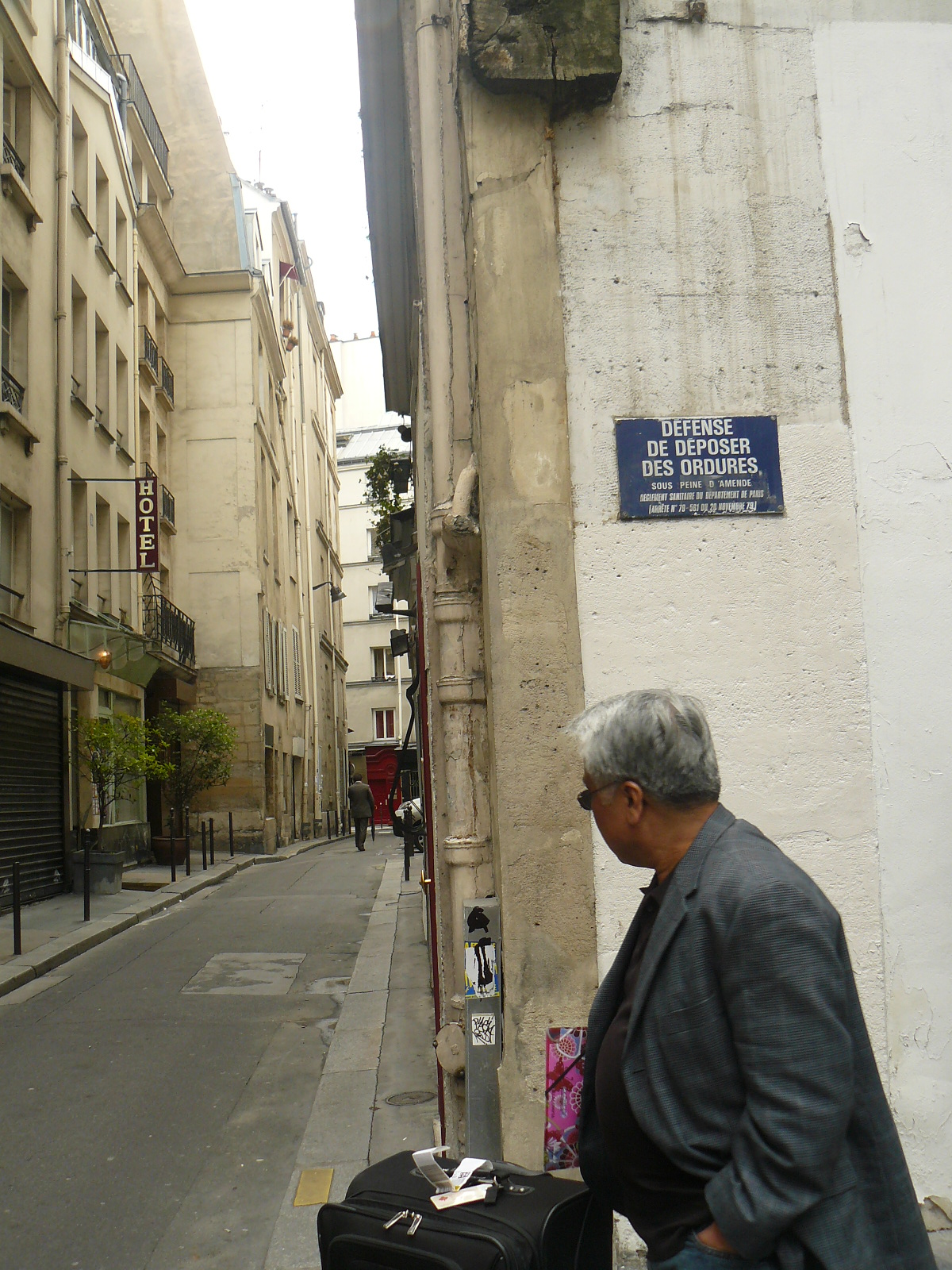
Isobel hustled us off into a taxi and took us to our Paris flat at the 1er Arrondisement, in the Louvre-Rivoli area. It didn’t take us long to agree that Isobel’s choice for our apartment had been a good one. As first-timers, it would have been more convenient for us, her aging parents, to stay in a one-bedroom flat close to the museums and downtown core. In fact, the flat on 1er Arrondisement sits in the heart of Paris, in a small lane kitty-corner to the Louvre, the Palais Royale, and rue St. Honore. Staying there was like having the Louvre for your neighbour. The museum was a staring distance away, only about 300 metres from the corner of our flat.


After testing whether stuff worked in our temporary home away from home, Isobel gave us a few pointers in navigating the Paris Metro or subway, and warned us about pickpockets and thieves. We did not carry the Bank of Canada on our trip; still, we listened and carried our bag and wallet close to our chests for all they were worth.

Since it was our first day, we thought to take the day slowly, and not to frazzle ourselves by doing errands and visits right away.


To set the proper mood, we decided to start our Paris stay by going to the Café de Flore, the café of our dreams, on rue Ste. Germaine-de-Presse.


The Paris Metro ride to that famous boulevard was an experience in itself. The trains have see-through windows from all sides; you could see the cavernous tunnels throughout the ride. Instead of rows of seats as in a regular train, the Metro train, although narrower, had face-to-face seats that allowed more people interaction and legroom. The subway’s walls were postered with all kinds of announcements in a whirl of colours and designs. It was like going to the Sunday fair, with each subway stop topping the next with its own set of posters, seats and stands.


We took a short visit to the Eglise Ste. Germaine-de Presse as soon as we got off the Metro. Instead of wooden pews, the church had woven wicker chairs lined up to the front and to the sides. The silence and solemnity inside astounded us.

Our first stop, the Café de Flore, looked smaller than was depicted on its website and Internet postings.


I had expected a geyser of vines and flowers gushing from its rooftop, instead a steady thin rain marred our view of the boulevard from its outdoor roofed-in extension. We peremptorily ordered two espressos and the house chocolate special (my choice). It turned out the chocolate pot special contained about three cupsful of chocolate as I began pouring one cup after the other, thanking my good fortune. The hot chocolate was divine, served with a tiny chocó bar on the side. Xavier, our waiter, obliged us with a smile when we took his photo as a souvenir of our short but sweet stopover.


As we braved the rain again searching for an umbrella store, we traversed the cobblestoned sidewalks with Sonia Rykiel, Ralph Lauren, Prada and assorted fashion houses trailing on our side. Isobel warned:

“Mom, you‘ll never find your Dollarama umbrella here!”

And, of course, we didn’t and couldn’t, even if we tried. We found it about a dozen Metro stops away, where Isobel lived, on the 17th Arrondisement.

Farther away, but where, according to Isobel, real people lived.

We found the butcher, the baker and the candlestick maker, and the vegetable and fruit market in a tiny cobblestoned street that also offered some of the cheapest wines and cheeses and smoked meats this side of Paris.


And yes, as if by some magic, this gaunt and charming French vendor plying his huge cotton and canvas umbrellas fit for the queens and princesses shopping at rue St. Honore. For ten Euros, his umbrellas were a steal.


However, before we found our umbrella man, Isobel took us again for another espresso and pistachio glacé at the top-floor restaurant of a Le Bon Marché outlet. Although it was still raining and we could not stay in the café’s beautiful indoor garden, we knew in our hearts why Isobel has found bliss in this lovely green spot to while her schoolwork cares away.